Category: Start Here

New to growing herbs inside? Begin with these guides.

  • Kitchen Herb Garden Ideas for Small Spaces

    Kitchen Herb Garden Ideas for Small Spaces

    This guide contains affiliate links. As an Amazon Associate I earn from qualifying purchases, at no extra cost to you. See the affiliate disclosure.

    You can grow herbs in almost any kitchen if you put them where the light is. The seven kitchen herb garden ideas below go from a single windowsill to a lit shelf, so pick the one that fits the space and the sun you have.

    First, find your light

    Before buying anything, watch your kitchen for a day. Most herbs want about 6 hours of direct sun, and Iowa State University Extension calls light the most limiting factor indoors. Where the sun lands decides which idea will work.

    Your kitchenBest ideas
    Sunny window with a sill1, 2 or 3
    Sunny window, no sill3 or 4
    Little or no direct sun5 or 6
    No floor or counter space at all3

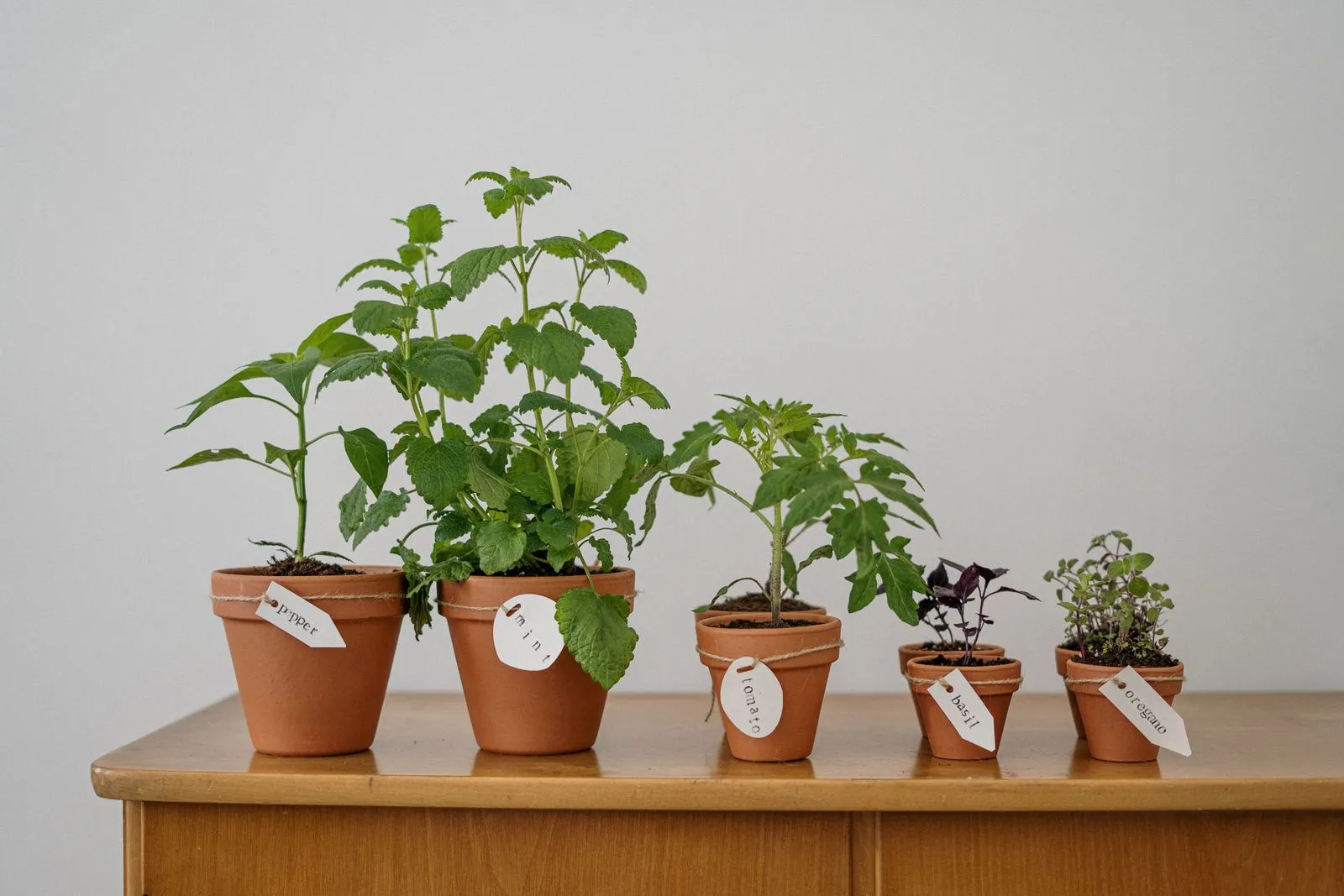
    1. A row of pots on the sill

    The classic, and still the simplest. Use pots with drainage holes and a tray underneath to protect the sill. University of Illinois Extension suggests containers at least 6 inches across. Turn the pots every few days so the plants grow evenly.

    2. One long window box

    A single trough looks tidier than several pots and holds more soil, so it dries out more slowly. Plant herbs with similar thirst together: basil, parsley and chives in one box; thyme, oregano and sage in another. Keep mint out of shared boxes, because it spreads through the whole container.

    3. Hanging pots in the window

    Hanging planters use the brightest part of the window without taking any counter space. Penn State Extension notes that herbs with a trailing habit can be grown in hanging baskets. Check that you can reach them easily, because hanging pots dry out faster.

    4. A tiered stand beside the window

    If there is no sill, a narrow plant stand or a small rolling cart next to the glass does the same job. Put the sun-lovers on the top tier and the herbs that tolerate less light, such as mint and parsley, lower down. A cart can follow the sun, or move aside when you need the floor.

    5. A shelf with a grow light under the cabinet

    No sun at all? Fix a slim LED grow light under a wall cabinet and line the pots up beneath it on the counter. Iowa State suggests running a full-spectrum grow light on a timer for 12 to 16 hours a day, and University of Illinois Extension places the light 6 to 12 inches above the plants.

    This is the setup that makes herbs possible in a windowless corner, and a timer means there is nothing to remember.

    6. A countertop hydroponic garden

    All-in-one countertop units combine a water tank, a pump and a built-in light. You can also build a simpler version yourself, as our guide to hydroponic herbs at home explains. They cost more than pots, but they take the guesswork out of light and watering, which makes them a fair choice for a dim kitchen.

    7. A pebble tray cluster

    Group several small pots together on a shallow tray of pebbles and water. Penn State recommends grouping containers, or standing them on moist pebbles, to raise the humidity around herbs in homes with dry heated air. It also turns a scatter of mismatched pots into one neat display.

    Browse kitchen herb garden gear on Amazon

    These links open Amazon search results, so you can compare what is in stock and read the reviews. Indoor Herb Guide has not tested individual products. As an Amazon Associate I earn from qualifying purchases.

    Places to avoid

    • Right beside the stove. Heat and grease are hard on leaves.
    • Over a heating vent. University of Illinois Extension warns that vents dry plants out.
    • Against cold winter glass. Penn State says basil cannot survive below 50°F and should not sit on a windowsill in winter.
    • The top of the fridge. It is warm, but usually far too dark.

    Which herbs to start with

    For a first kitchen garden, choose three herbs you cook with every week. The beginner’s guide covers the five most forgiving, and herbs that grow in low light will help if your window is on the dim side.

    Sources

  • The Best Herbs to Grow Indoors, Ranked by How Much Light You Have

    The Best Herbs to Grow Indoors, Ranked by How Much Light You Have

    The best herbs to grow indoors are the ones that match your light. Chives, mint, parsley, cilantro and lemon balm cope with the least. Basil, oregano and sage need a properly sunny window. Rosemary, thyme and bay need the most, and often a grow light.

    Light is the limit indoors. Iowa State University Extension calls it the most limiting factor for indoor herbs, so this ranking starts there and works up.

    The best herbs to grow indoors at a glance

    HerbLight it needsWateringGood to know
    ChivesLower: 2 to 6 hours of sunKeep evenly moistRegrows after cutting
    MintLowerKeep evenly moistGrow it alone in its pot
    ParsleyLowerKeep evenly moistCut whole stalks at the base
    CilantroLower: 2 to 6 hours of sunKeep evenly moistShort-lived; resow often
    Lemon balmLower: 2 to 6 hours of sunKeep evenly moistLemony leaves for tea
    BasilBright: about 6 hours of sunNever let it dry out fullyNeeds warmth above 50°F
    OreganoBright: about 6 hours of sunLet it dry slightlyTrailing habit suits a hanging pot
    SageBright: about 6 hours of sunLet it dry slightlyWater before leaves wilt
    ThymeBrightest: full direct sunLet it dry slightlyMay need a grow light
    RosemaryBrightest: full direct sunSources differ; see belowMay need a grow light
    BayBrightest: full direct sunLet it dry slightlyA slow, long-lived shrub

    If your window gets only a few hours of sun

    Penn State Extension lists lemon balm, chives and cilantro as herbs that tolerate low light and need only 2 to 6 hours of direct sun. Iowa State adds parsley, mint and chives as herbs that manage with a little less light than the rest.

    These five are the safe choices for east or west windows and for bright rooms where the pot sits back from the glass. There is more detail in herbs that grow in low light.

    If you have a sunny south-facing window

    With around 6 hours of direct sun you can add basil, oregano and sage. All three appear on the University of Illinois Extension list of herbs that are easily grown indoors.

    Basil is the most rewarding of the group and the most demanding. It wants warmth as well as light. The basil guide covers it in full.

    If you have full sun all day, or a grow light

    Penn State names bay, rosemary and thyme as the herbs that do best in direct sunlight. Iowa State says the same three may need supplemental light indoors, from a full-spectrum LED or fluorescent grow light run 12 to 16 hours a day on a timer.

    In practice, these Mediterranean herbs are the ones most likely to fade on a winter windowsill. If you want them indoors year round, plan on a lamp.

    Where the experts disagree: watering rosemary

    Penn State groups rosemary with bay, oregano, sage and thyme as herbs whose potting mix should dry out slightly between waterings. University of Illinois Extension gives rosemary as an example of an herb whose soil should never dry out completely.

    Both can be read together: let the surface dry, but do not let the whole pot go bone dry. Rosemary rarely recovers once its roots have dried right out.

    Herbs to skip indoors

    • Fennel, horseradish and lovage: Penn State advises against them because their root systems are too large for containers.
    • Tarragon in homes with pets: Penn State lists it as toxic to dogs and cats.
    • Dill, unless the pot is deep: it grows a taproot and needs depth.

    How to choose

    1. Count the hours of direct sun your best window gets.
    2. Pick from the matching group above.
    3. Start with two or three herbs you cook with every week.
    4. Add a grow light before you add the sun-hungry herbs.

    New to all of this? Begin with the beginner’s guide.

    Sources

  • Easy Herbs to Grow Indoors: A Beginner’s Guide

    Easy Herbs to Grow Indoors: A Beginner’s Guide

    This guide contains affiliate links. As an Amazon Associate I earn from qualifying purchases, at no extra cost to you. See the affiliate disclosure.

    The easy herbs to grow indoors are chives, mint, parsley, basil and cilantro, so start with those if you have never grown herbs inside before. All five are on university extension lists of herbs that do well indoors, and the first three forgive a window that is less than perfect.

    Five easy herbs to grow indoors

    HerbWhy it is a good first plantWatch out for
    ChivesTolerates lower light and regrows after every cutCut leaves near the base, not the tips
    MintTough, fast and happy with a little less lightGive it its own pot; it crowds out neighbors
    ParsleyCopes with less light than most herbsSlow from seed, so buy a young plant
    BasilFast and productive in a bright windowNeeds warmth and the most light of the five
    CilantroHandles lower light and cooler roomsShort-lived, so sow a new pot every few weeks

    Penn State Extension names chives, basil and cilantro as great options for an indoor herb garden. Iowa State University Extension adds that parsley, mint and chives will tolerate a little less light than other herbs.

    A simple setup in five steps

    1. Pick your brightest window. Most herbs want about 6 hours of direct sun. A south-facing window is best.
    2. Use pots with drainage holes. University of Illinois Extension suggests a container at least 6 inches across.
    3. Fill them with potting mix. Use a well-drained bagged mix, not soil dug from outside.
    4. Water when the surface is dry. Check with a finger, and water before the plant wilts.
    5. Feed lightly. A weak liquid fertilizer about every 2 weeks is enough. More than that can dull the flavor.

    That is the whole system. A sunny sill, five pots and a small watering can will keep a kitchen in fresh herbs.

    Buy plants or sow seeds?

    For a first attempt, young plants from a garden center are the easier route for chives, mint and parsley, because you can harvest within weeks. Basil and cilantro grow quickly from seed, and since both are short-lived, sowing a fresh pot every few weeks keeps the supply going.

    Browse a starter setup on Amazon

    These links open Amazon search results, so you can compare what is in stock and read the reviews. Indoor Herb Guide has not tested individual products. As an Amazon Associate I earn from qualifying purchases.

    Herbs to leave for later

    • Rosemary, thyme and bay. These want the most direct sun of all. Iowa State notes they may need a grow light indoors.
    • Fennel, horseradish and lovage. Penn State advises against them in containers because of their large root systems.
    • Tarragon, if you have pets. Penn State lists it as toxic to dogs and cats.

    Four mistakes that kill first herb gardens

    • Too little light. Thin, stretched stems and small pale leaves mean the plant needs a brighter spot or a lamp.
    • Pots without drainage. Water pools at the bottom and the roots rot.
    • Watering on a schedule. Check the soil instead. Needs change with the season and the pot.
    • Picking single leaves. Cutting stems back makes most herbs branch and produce more.

    Once these five are thriving, the basil guide goes deeper on the fussiest of them, and the full ranking of indoor herbs will help you choose what to add next.

    Sources