
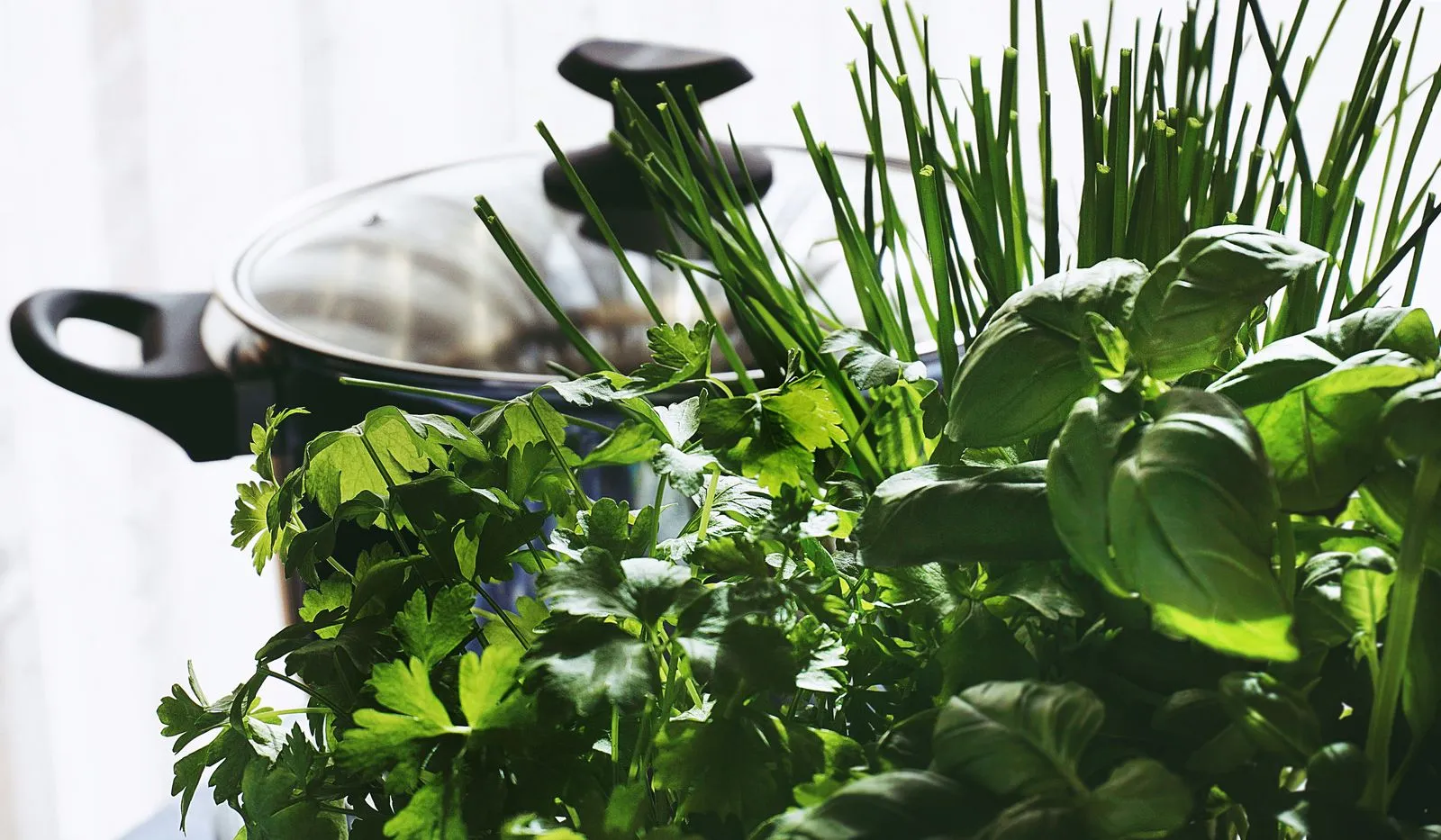
The best herbs to grow indoors are the ones that match your light. Chives, mint, parsley, cilantro and lemon balm cope with the least. Basil, oregano and sage need a properly sunny window. Rosemary, thyme and bay need the most, and often a grow light.
Light is the limit indoors. Iowa State University Extension calls it the most limiting factor for indoor herbs, so this ranking starts there and works up.
The best herbs to grow indoors at a glance
| Herb | Light it needs | Watering | Good to know |
|---|---|---|---|
| Chives | Lower: 2 to 6 hours of sun | Keep evenly moist | Regrows after cutting |
| Mint | Lower | Keep evenly moist | Grow it alone in its pot |
| Parsley | Lower | Keep evenly moist | Cut whole stalks at the base |
| Cilantro | Lower: 2 to 6 hours of sun | Keep evenly moist | Short-lived; resow often |
| Lemon balm | Lower: 2 to 6 hours of sun | Keep evenly moist | Lemony leaves for tea |
| Basil | Bright: about 6 hours of sun | Never let it dry out fully | Needs warmth above 50°F |
| Oregano | Bright: about 6 hours of sun | Let it dry slightly | Trailing habit suits a hanging pot |
| Sage | Bright: about 6 hours of sun | Let it dry slightly | Water before leaves wilt |
| Thyme | Brightest: full direct sun | Let it dry slightly | May need a grow light |
| Rosemary | Brightest: full direct sun | Sources differ; see below | May need a grow light |
| Bay | Brightest: full direct sun | Let it dry slightly | A slow, long-lived shrub |
If your window gets only a few hours of sun
Penn State Extension lists lemon balm, chives and cilantro as herbs that tolerate low light and need only 2 to 6 hours of direct sun. Iowa State adds parsley, mint and chives as herbs that manage with a little less light than the rest.
These five are the safe choices for east or west windows and for bright rooms where the pot sits back from the glass. There is more detail in herbs that grow in low light.
If you have a sunny south-facing window
With around 6 hours of direct sun you can add basil, oregano and sage. All three appear on the University of Illinois Extension list of herbs that are easily grown indoors.
Basil is the most rewarding of the group and the most demanding. It wants warmth as well as light. The basil guide covers it in full.
If you have full sun all day, or a grow light
Penn State names bay, rosemary and thyme as the herbs that do best in direct sunlight. Iowa State says the same three may need supplemental light indoors, from a full-spectrum LED or fluorescent grow light run 12 to 16 hours a day on a timer.
In practice, these Mediterranean herbs are the ones most likely to fade on a winter windowsill. If you want them indoors year round, plan on a lamp.
Where the experts disagree: watering rosemary
Penn State groups rosemary with bay, oregano, sage and thyme as herbs whose potting mix should dry out slightly between waterings. University of Illinois Extension gives rosemary as an example of an herb whose soil should never dry out completely.
Both can be read together: let the surface dry, but do not let the whole pot go bone dry. Rosemary rarely recovers once its roots have dried right out.
Herbs to skip indoors
- Fennel, horseradish and lovage: Penn State advises against them because their root systems are too large for containers.
- Tarragon in homes with pets: Penn State lists it as toxic to dogs and cats.
- Dill, unless the pot is deep: it grows a taproot and needs depth.
How to choose
- Count the hours of direct sun your best window gets.
- Pick from the matching group above.
- Start with two or three herbs you cook with every week.
- Add a grow light before you add the sun-hungry herbs.
New to all of this? Begin with the beginner’s guide.
Sources
- Growing Herbs Indoors, Penn State Extension
- Herbs all winter: grow them indoors, University of Illinois Extension
- Can I grow herbs indoors over the winter?, Iowa State University Extension