
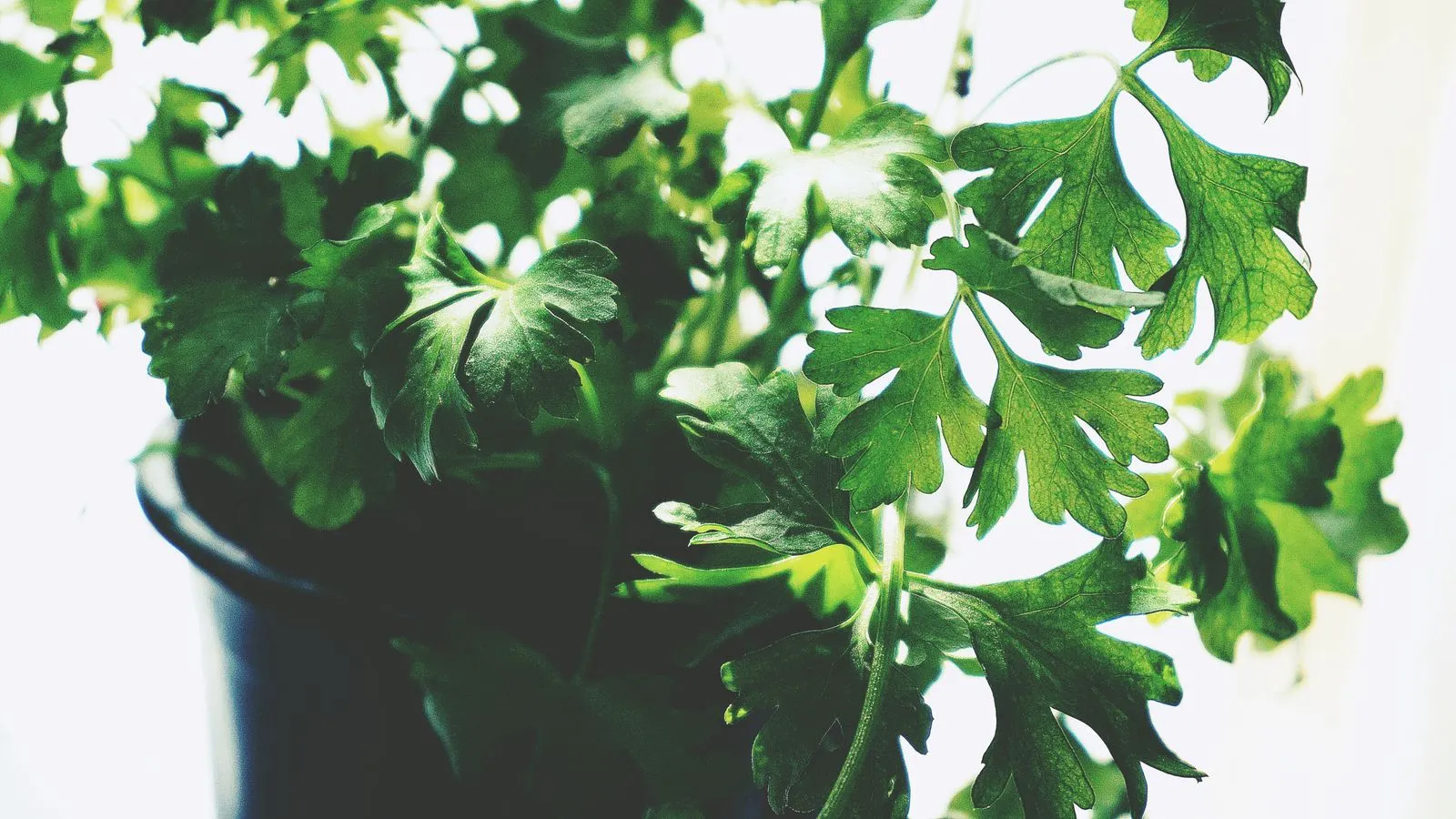
The herbs that grow in low light indoors are chives, mint, parsley, cilantro and lemon balm. None of them grows in the dark, though. Low light for an herb still means a couple of hours of direct sun.
What counts as low light
Penn State Extension puts a number on it. Most herbs need about 6 hours of direct sunlight, while the herbs that tolerate low light need only 2 to 6 hours.
So a low-light spot is an east or west window, or a south window partly shaded by a building or tree. A north-facing window or a shelf across the room usually gets no direct sun at all, and that is too little for any herb without a lamp.
Five herbs that grow in low light
| Herb | Named as low-light tolerant by | How to use the little light you have |
|---|---|---|
| Chives | Penn State and Iowa State | Cut often; new leaves keep coming |
| Cilantro | Penn State | Likes cooler rooms; resow every few weeks |
| Lemon balm | Penn State | Pinch tips to keep it bushy |
| Parsley | Iowa State | Harvest outer stalks first |
| Mint | Iowa State | Keep in its own pot and trim hard |
Iowa State University Extension describes parsley, mint and chives as herbs that will tolerate a little less light than the ideal 4 to 6 hours of direct sun.
Herbs that will not work
Rosemary, thyme and bay do best in direct sunlight, according to Penn State, and Iowa State says they may need a grow light even in a good window. Basil also wants a bright, warm spot. In a dim room these are the first to fail.
Signs your herb needs more light
- Long, thin stems. The plant is stretching toward the window.
- Smaller leaves than before. New growth comes in undersized.
- Weak scent and flavor. Penn State notes that under-lit herbs have reduced aroma.
- Leaning. The whole plant tilts toward the glass.
Iowa State’s rule is simple: if you notice long, lanky growth, more light may be needed.
Getting more from a dim window
- Move the pot right up to the glass. Light falls off quickly with distance. In winter, pull tender herbs back at night so they do not chill.
- Turn the pot every few days. Penn State recommends rotating windowsill pots so every side gets light.
- Keep the glass and the leaves clean. Dust blocks light.
- Do not overwater. Plants in low light grow slowly and drink less, so the soil stays wet longer.
When to add a grow light
If your only window faces north, or your herbs keep stretching, a lamp solves the problem. Our guide to the best grow light for herbs explains what to buy. Iowa State suggests a full-spectrum LED or fluorescent grow light on a timer for 12 to 16 hours a day. University of Illinois Extension places the light 6 to 12 inches above the plants.
With a lamp, the light-hungry herbs become possible too. See the full ranking of indoor herbs by light for what to add.
Sources
- Growing Herbs Indoors, Penn State Extension
- Herbs all winter: grow them indoors, University of Illinois Extension
- Can I grow herbs indoors over the winter?, Iowa State University Extension